So, you're trying to choose a Large Urn Vase? It really starts with a few basics: shape, material, scale, and where it's actually going. A tall ceramic urn can look amazing framing a hotel entrance. A weather-resistant stone one? That's more of a garden-path anchor. Fiberglass is easier to move around, while cast metal gives you that heavier architectural punch. Each one says something a little different.
In this guide, we're looking at ten widely used Large Vase Urn styles—classical, fluted, pedestal, garden, modern, and oversized decorative forms, among others. We'll compare proportions, stability, drainage, surface finish, maintenance, and visual balance. And honestly? Real-world experience matters here. An urn can be gorgeous and still feel awkward if the opening is too narrow to plant in, or if the base can't handle the full weight. Those little details add up.
Not every popular design works in every space, either. That's worth saying.
We'll also look at how color, rim thickness, and ornament change where an urn feels right. A matte charcoal finish, for example, can fit a contemporary lobby beautifully. Aged terracotta? It can soften a courtyard with brick walls. And do check measurements carefully—especially near walkways, doorways, or spots with strong wind.
Some of this is subjective, of course. Personal taste, climate, and installation conditions can shift the answer. Even expert advice has its limits. So by comparing these ten Large Urn Vase types through practical, design-focused criteria, you can make a more informed choice. The point isn't to crown one universal winner. It's to find the form that performs reliably and looks right in its actual environment.
Definition and Key Features of Large Urn Vases
Definition and Key Features of Large Urn Vases
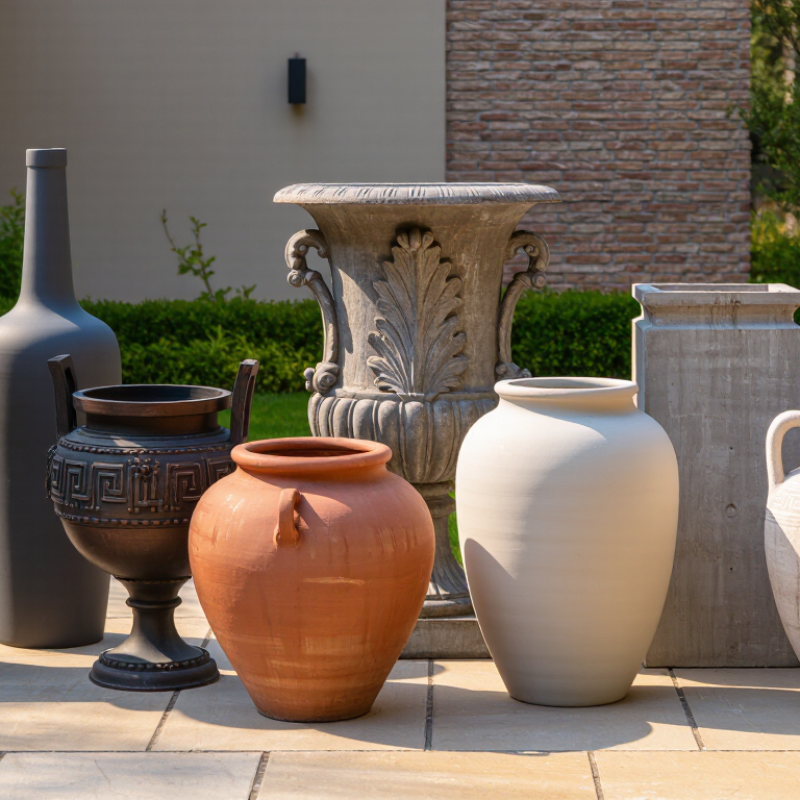
A Large Urn Vase is a tall decorative vessel with a wide body, defined shoulder, and narrow or open neck. It may hold flowers, branches, or stand empty as architectural décor. The main types include Greek amphora, Roman urn, Chinese ginger jar, Moroccan urn, pedestal urn, fluted urn, lidded urn, footed urn, garden urn, and contemporary sculptural urn. Each type changes the room’s visual weight. A fluted urn adds vertical rhythm, while a ginger jar creates a rounded, calmer silhouette.
Materials include ceramic, terracotta, stone, metal, fiberglass, and recycled composites. Key features deserve close inspection: base width, wall thickness, rim shape, drainage, finish, and center of gravity.
In practical installations, a broad base is safer near doorways and busy floors. A narrow neck suits tall branches, but it can make the vase visually unstable. Measure the opening first. Many buyers forget this.
Grand View Research reported that the global home décor market reached about 682.9 billion U.S. dollars in 2023, with continued growth projected through 2030. That scale supports wider demand for decorative vessels, but market growth does not guarantee quality.
The Business Research Company also identifies rising interest in personalized interiors and handcrafted décor. Still, classifications are not perfectly tidy. Some modern urns borrow amphora handles, pedestal bases, and Asian glazing at once. That overlap can confuse shoppers, yet it also makes comparison more useful than relying on style names alone.
Classical Greek, Roman, and Neoclassical Urn Vases
Large Urn Vases reveal how Greek, Roman, and Neoclassical design shaped decorative art. Their forms were practical, ceremonial, and architectural. The ten most useful types include the amphora, hydria, volute krater, calyx krater, bell krater, loutrophoros, Roman cinerary urn, Medici urn, Campana urn, and monumental garden urn.
Classical Greek examples often show balanced handles, painted figures, and carefully measured shoulders. A volute krater may display spiral handles beside scenes of processions or mythology. A hydria usually has three handles, reflecting its original water-carrying function. These details matter. They help distinguish historical forms from later decorative copies. In person, I also check the rim, foot, and interior surface. Uneven tool marks can suggest age, but they are not proof by themselves.
Roman urns often use marble, carved garlands, portrait panels, or shallow relief. Their compact bodies feel heavier than many Greek vessels. Neoclassical designers borrowed these elements and enlarged them for halls, terraces, and formal gardens. A Gold Urn Vase may combine a Greek silhouette with Roman ornament and a polished metallic finish. That mixture can look impressive, though it is not historically pure. I would avoid calling every tall vessel an antique urn. Scale, material, construction, and provenance deserve equal attention. Even experienced collectors can misread restoration, especially around handles and painted surfaces.
Asian-Inspired Ceramic and Porcelain Urn Vases
What Are the Top 10 Large Urn Vase Types?
Asian-Inspired Ceramic and Porcelain Urn Vases
Large Urn Vases bring strong architectural presence to an entryway, dining room, or quiet garden corner. Asian-inspired designs often combine balanced silhouettes with detailed ceramic or porcelain surfaces. Popular forms include the ginger jar, baluster urn, temple jar, rouleau vase, moon flask, fishbowl vase, umbrella vase, bottle vase, hexagonal urn, and double-gourd vase.
Each shape creates a different visual rhythm. A ginger jar feels grounded and traditional, while a moon flask adds curved elegance. A rouleau vase suits tall branches and narrow spaces. The fishbowl form works well with broad arrangements. For Large Vase And Flowers displays, choose stems with varied heights, such as cherry branches, lotus leaves, or dried grasses. Keep the arrangement slightly loose. Perfect symmetry can look artificial.
Material also affects the vase’s character. Porcelain usually offers a smoother body and finer painted details. Ceramic often feels warmer, heavier, and more tactile. Examine the glaze under natural light. Tiny variations may reveal handmade work, though they can also signal inconsistent firing. I have found that weight, base stability, and an even rim matter more than decoration alone.
Check the opening before buying. It should hold stems without forcing them together. Measure doorways and shelves carefully; large urns are less forgiving than expected. Use a secure, level surface, especially with tall forms. I once underestimated the visual weight of a dark urn. It overwhelmed the room. A lighter glaze would have worked better. Scale matters.
What Are the Top 10 Large Urn Vase Types?
This chart compares representative heights for ten large Asian-inspired ceramic and porcelain urn vase forms. The measurements are approximate reference values in centimeters; actual dimensions vary by maker, period, and decorative purpose.
Stone, Terracotta, and Concrete Garden Urns
What Are the Top 10 Large Urn Vase Types?
Stone, terracotta, and concrete garden urns bring strong structure to outdoor spaces. The ten most useful types include classical pedestal, campana, tulip, bowl, amphora, pineapple-top, lion-head, fluted, square-plinth, and two-handled urns. Stone suits formal paths because it feels permanent and develops natural weathering. Terracotta offers warmer color and softer texture. However, it can absorb water and crack during freezing weather. Concrete provides weight and stability for exposed gardens. Its surface may develop small marks, which are not always defects.
I have found that scale matters more than decoration. A large urn should relate to nearby doors, steps, or mature plants.
Tips:
Check drainage holes before buying. Raise heavy urns slightly above paving. Use a frost-safe liner in cold regions. Keep terracotta away from standing water. Measure the entrance and path first. I once chose an urn that looked perfect online, but moving it through a narrow gate became unnecessarily difficult.
For stone urns, inspect the base for hairline fractures and uneven support. For concrete, look for consistent walls and a stable center of gravity. Terracotta works beautifully with herbs, lavender, and trailing flowers.
Wide campana and bowl forms suit seasonal displays, while amphora and tulip shapes create taller silhouettes. A lion-head or pineapple-top urn can become a focal point, but excessive ornament may compete with the house.
The best choice is not always the most elaborate one. Consider sun exposure, watering habits, winter temperatures, and the visual weight of surrounding plants.
Metal, Glass, and Fiberglass Urn Vases
What Are the Top 10 Large Urn Vase Types?
Metal, Glass, and Fiberglass Urn Vases
Large Urn Vases can define an entryway, terrace, or spacious living room. Their material affects weight, finish, care, and visual balance. Ten useful types include stainless steel, brass, copper, cast iron, clear glass, frosted glass, colored glass, mosaic glass, stone-look fiberglass, and fluted fiberglass. Each option creates a different impression.
Stainless steel offers clean lines and strong corrosion resistance. Brass adds warm, formal character, while copper develops a natural patina over time. Cast iron feels substantial, but its weight makes relocation difficult. Clear glass keeps rooms visually open and suits fresh branches or tall dried stems. Frosted glass softens light and hides water marks better. Colored glass can become the main accent, although strong hues may compete with nearby furniture. Mosaic glass brings texture through small reflective pieces.
Fiberglass urns are lighter than metal and often easier to position on balconies or upper floors. Stone-look finishes provide a grounded appearance without the full weight of masonry. Fluted fiberglass adds vertical rhythm and can make a narrow space feel taller. In my experience, drainage and stability matter more than decorative detail outdoors. A wide base helps in wind, but it may look heavy indoors. I once underestimated that contrast. Check wall thickness, surface protection, and placement before filling the vase, especially when using tall branches or wet floral foam.
Modern Oversized Floor Urns and Decorative Planters
Modern oversized floor urns can give a room architectural height without adding another piece of furniture. In residential styling, I often compare ten useful types: pedestal urns, amphora urns, bowl urns, tapered cylinders, fluted urns, ribbed urns, geometric urns, wide-mouth planters, tall square planters, and low statement bowls. Each shape changes the room’s rhythm.
A pedestal urn suits a quiet entryway or fireplace corner. A tapered cylinder works well beside a sofa or console. In a Living Room Large Vase arrangement, tall branches can soften hard lines and draw attention upward. Wide-mouth planters hold fuller foliage, while narrow openings create a cleaner silhouette. Fluted and ribbed surfaces catch daylight differently, especially near large windows. Matte finishes usually feel calmer than glossy ones.
Scale needs practical judgment. Leave enough walking space around every oversized planter. Check the container’s weight before placing it on delicate flooring. Drainage also matters when using live plants indoors. A sealed decorative urn may be safer for wood floors, but standing water can still cause trouble. I have learned that symmetry is not always better. Two mismatched urns can feel more natural, though my first arrangement looked unfinished. A slightly uneven branch pattern often creates more character. That small flaw can work.
FAQS
Common styles include pedestal, campana, tulip, bowl, amphora, fluted, and two-handled urns. Pineapple-top and lion-head designs create stronger focal points. Choose scale before ornament.
Stone works well beside formal paths, steps, and mature plants. It feels permanent and develops natural weathering. Check the base for hairline fractures and uneven support.
Terracotta provides warm color and a soft, natural texture. It absorbs water and may crack during freezing weather. Use a frost-safe liner and avoid standing water.
Concrete offers weight and stability in windy locations. Small surface marks are not always defects. Inspect the walls and confirm that the center of gravity feels stable.
Measure doors, gates, stairs, and narrow paths before purchasing. Heavy urns can become difficult to turn or lift. I once ignored this detail.
Stainless steel offers clean lines and strong corrosion resistance. Brass feels warm and formal, while copper develops a changing patina. Cast iron is substantial but difficult to relocate.
Clear glass keeps a room visually open around branches and dried stems. Frosted glass softens light and hides water marks better. Fiberglass is lighter and easier to position upstairs.
A tall urn adds architectural height without another furniture piece. Tapered cylinders suit sofas and consoles, while wide-mouth planters hold fuller foliage. Leave clear walking space.
A lion-head or pineapple-top urn can anchor an entrance or terrace. Excessive decoration may compete with the house. The simplest choice may work better.
Not always. Two mismatched urns and uneven branches can feel more natural. My first arrangement looked unfinished, but a small flaw improved its character.
Conclusion
A Large Urn Vase is a substantial decorative vessel designed to create visual impact while offering space for floral arrangements, branches, or ornamental plants. This guide explores its defining features, including generous proportions, a stable base, deep openings, and a range of finishes. It introduces classical Greek, Roman, and Neoclassical styles, recognized for balanced shapes, sculptural details, and timeless elegance, as well as Asian-inspired ceramic and porcelain urns featuring refined silhouettes, artistic patterns, and smooth glazed surfaces.
The overview also compares stone, terracotta, and concrete garden urns, which are valued for durability and outdoor appeal, with metal, glass, and fiberglass versions that provide varied textures, weights, and contemporary finishes. Finally, modern oversized floor urns and decorative planters are considered for their ability to enhance entryways, living spaces, patios, and gardens. Together, these ten urn vase types offer versatile options for traditional, transitional, and modern settings.



 Home


